
17
Aug 2017
Trump Revokes Obama Order Protecting Infrastructure Projects from Climate Impacts
In the U.S. context, green infrastructure is primarily funded as a stormwater reduction measure. For this reason it must provide the service reliably, at a minimum. Research confirms that green infrastructure systems can reduce runoff at the site, block, and watershed scale, but much less is known about the other services these systems may provide in urban ecosystems, when they are strategically conceived, sited, and designed.
Because (GI) programs are typically being implemented in the context of adaptive management, the opportunity for practitioners, researchers, regulators, and community leaders to work together to pilot, monitor, and verify new green infrastructure configurations is upon us. Doing so requires flexibility, creativity, and the institutional willingness to attempt new things.
The New York City Urban Field Station “Science of the Living City” programs encompass all our educational efforts, affiliated partners, and special events. Affiliates include scholars-in-residence, fellows, and interns. Events include seminars, brownbag lectures, workshops, and symposia.
Science of the Living City engages diverse partners across the city, speaks to a wide professional and public audience, and addresses a variety of pressing issues related to urban social ecology and quality of life in cities. The goal is to explore new knowledge and the applications and implications of this knowledge in the urban context as well as to expand overall environmental literacy.
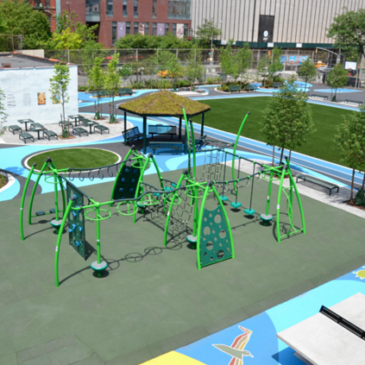
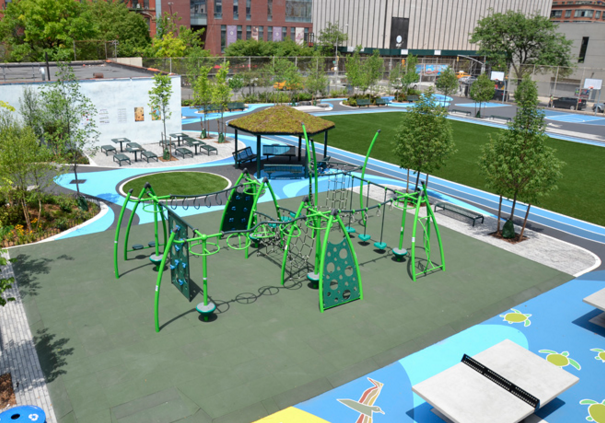
eDesign Dynamics is honored to have worked on such a tremendous project, transforming an asphalt lot to a state-of-the-art playground for NYC's Hells Kitchen community. The school, in an area almost devoid of parks, serves 600 kids, pre-K through 8th grade. Designed with help from the school's students and built in partnership with New York City, the one-acre playground will include green infrastructure components that will allow the space to capture up to 700,000 gallons of stormwater runoff each year.
Congratulations to Siteworks, the Trust of Public Land and the P.S. 111 student consultants!
See the full list of winning projects HERE >
Photo credit: dnainfo.com
On February 27th, an interdisciplinary jury comprised of landscape architects and allied professionals from the Southern California Chapter of the American Society of Landscape Architects (ASLA) convened to select winners of the 2016 ASLA New York Chapter Design Awards. Of the 55 award submissions, 18 projects received “Honor” or “Merit” designations. The awards will be presented at the ASLA-NY Design Awards Ceremony and Reception to be held on Thursday, April 7th, at the Center for Architecture in Manhattan.
The projects chosen represent excellence in professional accomplishment by ASLA New York members in five categories: General Design, Residential Design, Collaborative Design, Analysis/Planning/Research and Communications, and Un-Built Projects. This year’s jury responded favorably to the interesting collection of valuable ideas and research-based design solutions presented by award winners. ASLA-NY 2016 President Celine Armstrong notes, that “the body of work represented by this year’s award recipients is very inspiring as these projects will bring joy to those visiting these landscapes and awareness to our profession. I am thankful to the landscape architects who continue to work tirelessly creating such beautiful works of art.”
- See more at: http://aslany.org/7152-2/?cbg_tz=300#sthash.RWJoenwR.dpuf
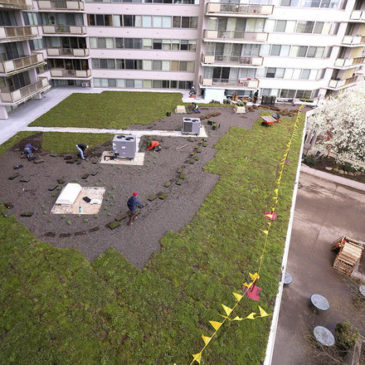
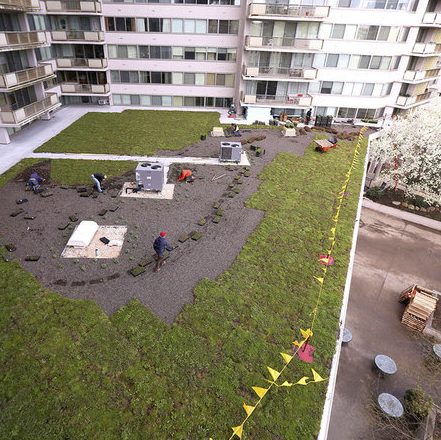
Across the city, the tops of buildings and parking lots are sprouting greenery like never before. The number of green roofs in Philadelphia has tripled since 2010, according to the Water Department, which tracks the roofs because they absorb storm-water runoff.
The city now has 111 green roofs, roughly 25 acres’ worth. An additional 64 roofs are in the queue. The completed ones range from a tiny poof of greenery atop a bus stop shelter - installed at 15th and Market Streets as an attention-getter in 2011 - to one of the latest and biggest, one-acre-plus of greenery at Cira Centre South in University City.
…
The region’s universities have not only been installing roofs, but also avidly studying them.
Among questions Drexel associate engineering professor Franco Montalto and his colleagues are pondering: Can we grow food crops, use native species (instead of desert-adapted sedum species), or create more biodiversity on green roofs in the urban Northeast? How differently do green roofs constructed on steeply sloped roofs perform? Can we adjust the design of the green roof to maximize its habitat value, such as attracting pollinators?
Photo credit: DAVID SWANSON
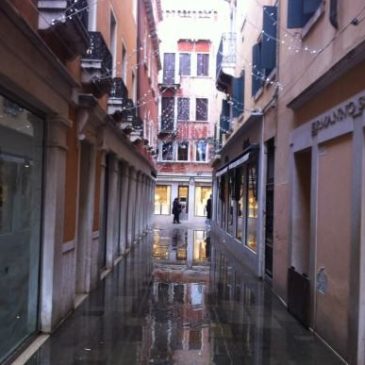
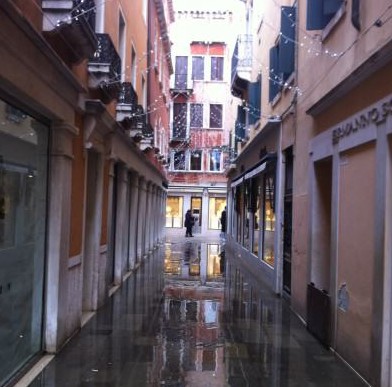
Walking through the flooded streets is another interesting experience. Everyone slows down—tremendously. It wasn’t initially clear to me why this was happening. Without cars, there’s always a lot of ground to cover in this city, and the average Venetian typically moves at a healthy gait. Feeling confident in my new stivali, I continued to move at this pace only to find out within a few minutes that I was suffering death by a thousand drops. It seems that each fast step kicks a few drops into the top of your boot. You don’t feel those individual drops, but keep it up and in a few minutes, your socks are soaked. I slowed down, realizing that alas, pazienza, everyone around me was used to this. When there’s acqua alta, it’s OK to be late, or to change the plan, or to cancel appointments. (Though, ironically, not for first graders. My daughter’s new teacher was careful to tell me that acqua alta is not an excuse to be late for school.) Venetians have adapted to contemporary acqua alta the way they adapted to life in a foggy lagoon over a thousand years ago. Life goes on despite it.
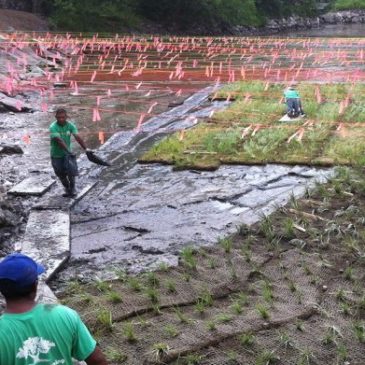
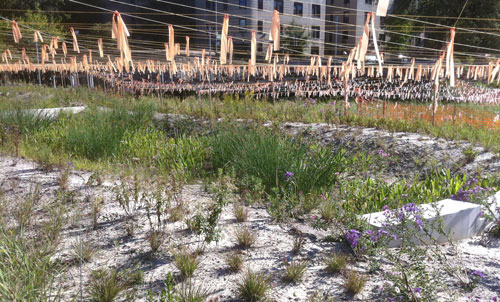
How does restoration in an urban area like New York City differ from elsewhere?
Traditional restoration work is often led by ecologists and biologists because they know what they need to create. But in the urban, post-industrial setting, the foundations of ecosystems are basically screwed up. These soils are high in nutrients and pH because of all the concrete, so they favor weedy species instead of our native species, which thrive in lower nutrient and more acidic soils. Then there is the poor water quality of the runoff, which includes oil, metals, and various other contaminants. Aligned with that is the issue of “flashy” hydrology: we get much more runoff and we get it a lot faster. So before you can establish a sustainable ecosystem, you need to fix the soils, the hydrologic regime, and the water quality.
Do you have any particular hopes for further integration of ecological ideas into urban development?
To be truly green would be to design everything so that on balance it has a net positive effect on the planet. It’s really hard to offset the negative impact of a building, because of all the materials brought in and the pollution caused by construction and people living there. Most people say that the next best step is to do everything that’s feasible within the budget to have as little an impact as possible. I still struggle with the building scale. With park development, however, you’re taking something with no habitat value and creating both that value and an amenity for the community.
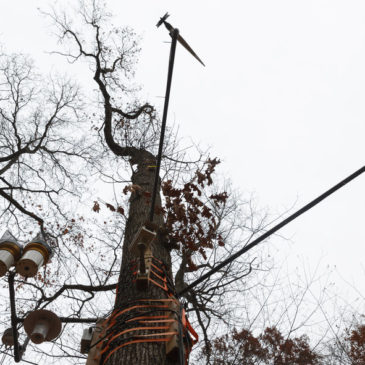
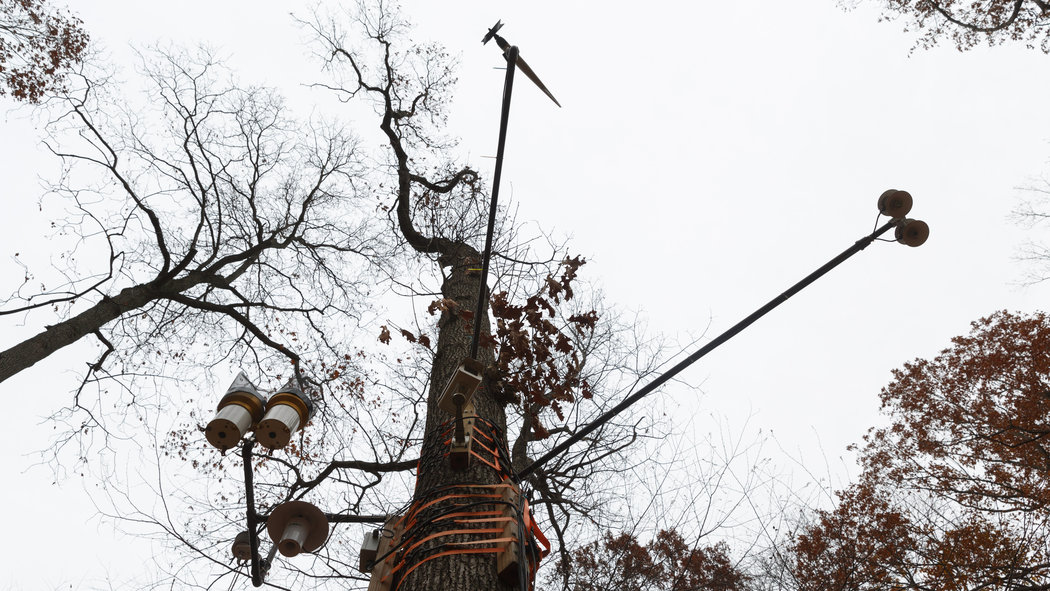
Franco A. Montalto, an associate professor in Drexel’s department of civil, architectural and environmental engineering, said that the availability of affordable digital sensors made it possible for him to gain access to that day’s recordings from Alley Pond Park on his iPad and instantly compare them with data from the two experimental storm-water runoff sites in the city.
But despite the high-tech tools, Dr. Montalto insists on having eyes and ears verify the data. To that end, more than a dozen high school, college and graduate students have periodically trekked to the site at Alley Pond to sift soil through their fingers and take photos.
“To believe the sensors, you need validation,” he said. “Bad data is worse than no data.”
Eventually, scientists working at Alley Pond Park would like local schools to make the research part of their lessons.
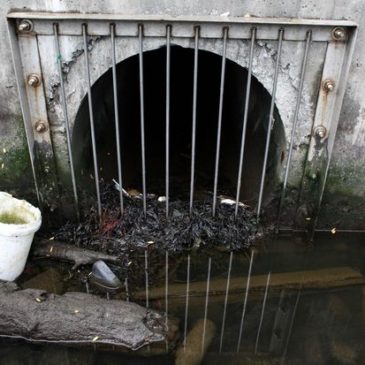
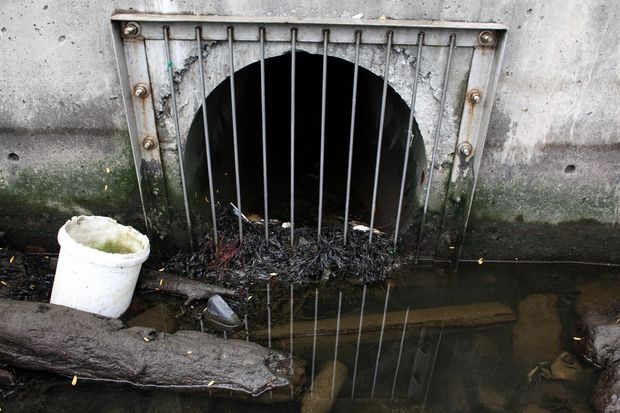
According to Franco Montalto, a professor at Drexel University, who works with the city on its Greenstreets project, if placed in the right location, with curb cuts to allow water in, using sturdy plants that can withstand long droughts and long periods of heavy rain, and with add several layers of engineered soil, bioswales can absorb far more than an inch of rain water (which is what the city hopes they can absorb).
At a Greenstreets in Cambria Heights, Queens, Montalto outfitted the plot with sensitive measuring devices. He found during Sandy and Irene, this plot of land absorbed all the rain water that flowed in, more than seven inches, and didn’t dump any of it into the streets or sewers.
Many believe that better information on the monetary value of ecosystem services is critical for getting cities to adopt more green infrastructure solutions to issues such as storm water management, heat island, storm surge, etc. True? What are the key knowledge gaps for convincing cities to invest in ecosystems services?
Decision makers (and individuals) always try to get the most out of their money. However, I believe that we could generate a lot more public support and associated investment in ecosystem services if they were better calibrated to the values, needs, and goals of diverse urban residents.
By modifying the configuration of urban spaces, we can change what happens there, i.e. we add and subtract functions to that particular urban space. A small but rapidly growing body of researchers from different disciplines (including yours truly) are working in lock step with practitioners to study these projects. I am confident that this work, though in its early stages, will ultimately produce robust empirical, statistical, or physical representations of these dynamic conditions, enabling us eventually to predict the various functions obtained from discreet modifications to urban space.
A related, and much more fundamental question, however, is why and how we modify urban spaces in the first place. Stated differently, given that there are an infinite number of ways that we can design/redesign/modify a space, be it a living room, a rooftop, or a wall, how do we settle on any one concept? Research here is less prevalent.
I believe that many green infrastructure advocates often mistakenly assume that a common set of values underlies such decisions, and expect that consensus regarding ecosystem service goals should follow. In my opinion, there is absolutely no reason to believe that such assumptions would be true. Anyone who grew up in a city remembers how differently you perceived the kids from your block compared to the kids on the next one. Even if you grew up in the suburbs, you remember how different the neighborhood on your side of the tracks was from the one on the other side. Our cities are dynamic networks of enclaves (voluntary clustering for example by ethnicity, lifestyle, or sexual orientation) and ghettos (default and/or imposed involuntary segregation of minority groups). In the US, zoning and other land use policies have also segmented our cities into commercial, residential and industrial areas, and physically separated high income from low income households on parcels of different sizes. We’ve got neighborhoods that are “where it is at”, neighborhoods that are “up and coming”, and neighborhoods that may- or may never- be; we’ve got contested, dangerous, sacred, and safe spaces; and both public and private land. The folks who live, work, and circulate through urban neighborhoods see different opportunities, face different challenges, have different goals, and, therefore, desire radically different things from the spaces around them. As any community planning meeting will demonstrate, most proposed changes to communities generate debate. If the transition to more enhanced urban ecosystem services is to be meaningful in scale and impact, it too will generate significant debate and discussion, and different strategies will emerge in different places.
I suppose that on a very basic level, it is safe to assume that we all want cleaner, healthier, more efficient cities, and broad typologies of ecosystem services (e.g. clean air, clean water, etc.) can be mapped to these goals. But in this usage, the ecosystem service concept is, to me, too general to be actionable and will therefore only generate lackluster support from the public. On the other hand, if the growing body of ecosystem service practitioners is willing to get down and dirty, more nuanced (and therefore more relevant = politically powerful) ecosystem service goals that address the real needs, goals, and aspirations of community residents can be developed. If you were a city council person, would you expect more phone calls from your constituents if you touted the need for cleaner water, or if instead you articulated your support to efforts that would create opportunities for gardening for local seniors; cut off the ability of thieves to access the backs of our houses; and eliminate persistent puddling in the streets after rainstorms?
The challenge is that as diverse as our communities are, is as diverse as these customized ecosystem service goals will be. It takes time and effort to inventory community needs, and the responsibility for doing so does not fall squarely on a water department, a public works department, or even on local politicians. Yet, by definition, ecosystem service goals need to be elicited directly from the public. They will be varied and responsive to the needs of different urban constituencies. They will vary from community to community, and from city to city. They will need to be adapted and changed over time, as communities change.
I am suggesting that instead of viewing ecosystem services as some new, noble, post-Brundtland, 21st century, game changing theoretical concept, let’s just think of this term as a name for our ever-improving multi-faceted abilities to map local to global, built to natural, and people to nature. If we can demonstrate the relevance of the concept in this way, very little convincing of the need for investment in ecosystem services will be required. It will be obvious.
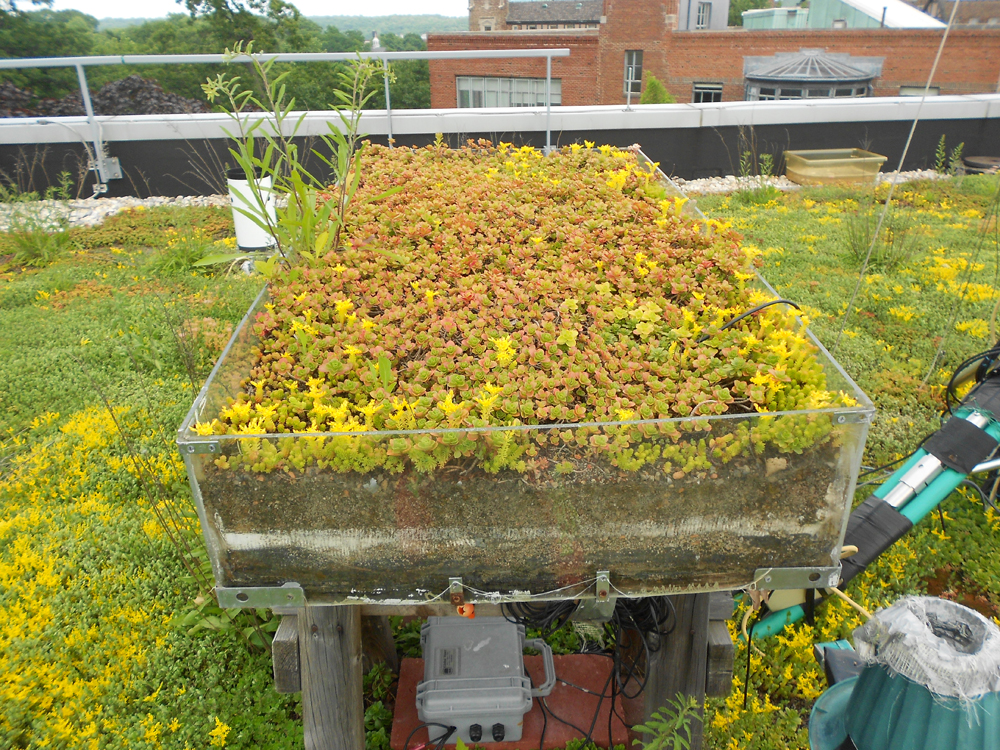
As it turns out, a key metric to charting urban green roof success is evapotranspiration, a combination of evaporation and plant transpiration. To learn more about ET and establish better procedures to estimate ET from green roofs, a group of researchers from Drexel University set up an experiment in Bronx, N.Y. Their work, published in the American Society of Civil Engineers’ journal, will make ET estimates for urban green spaces more accurate.
“There are different ways of estimating evapotranspiration. Many of the empirical methods are based on energy and water balance computations, and use crop coefficients to consider variability due to plant type,” said Franco Montalto, associate professor of civil, architectural and environmental engineering at Drexel University. “A big question is whether these equations are appropriate for green roofs and other urban green spaces.”
Q: How do you define GI?
A: I define GI broadly as decentralized engineering, enhancement, or protection of multifunctional landscape features. Although the principal driver for, and characteristics of, each GI project will differ based on local conditions, all GI projects provide multiple benefits.
I wear three hats that include practitioner, researcher, and community stakeholder. As a practitioner at EDD, I am typically tasked with developing GI designs that reduce the rate and volume of runoff generated on urban catchments. However, these same designs can also provide new urban microhabitats; become a source of nonpotable water; remove pollutants; or aesthetically enhance a streetscape, alley, courtyard, playground, or park. As a researcher, I quantify how much water directed to specific GI facilities evaporates, replenishes the soil moisture, or infiltrates. These hydrologic processes underlie many important ecosystem services. Urban evapotranspiration, for example, wicks heat away from the city, mitigating the urban heat island effect. By replenishing soil moisture, GI practices can enhance the ability of urban vegetation to sustain prolonged droughts, though they can also create waterlogged conditions that are detrimental to certain types of vegetation. Infiltration can recharge local aquifers but, if promoted in the wrong places, can also create basement flooding problems or otherwise interfere with the functioning of underground infrastructure, such as buried utilities or subway tunnels.